What follows is a fictional portrayal of the near future — a look into a possible world. But this is a story, not a prediction.
Names, characters, places, and incidents are purely a product of the author’s imagination. Any resemblance to actual persons, living or dead, or to actual events is purely coincidental.
Chapter 1
April 3, 2029
QuantoCorp applied laboratory Palo Alto, California
It was a beautiful spring morning in Palo Alto. The scientist heard neither the birdsong nor felt the sun’s early rays cutting through the fog.
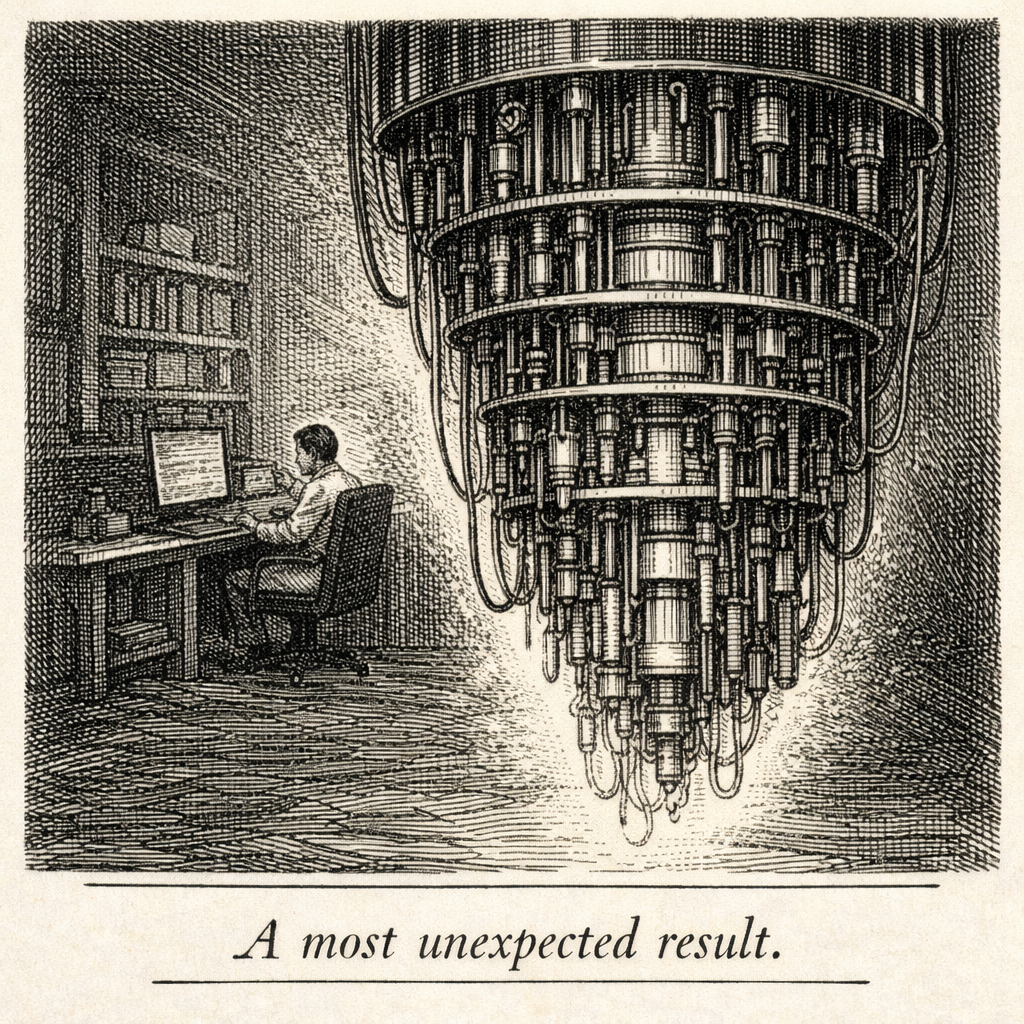
He was buried deep in the bowels of the lab, badged into a secure containment area, working on an airgapped system controlling the most delicate piece of hardware ever assembled: a 480-logical-qubitAn error-corrected unit of quantum information composed of many physical qubits. Logical qubits are stable enough to run meaningful quantum algorithms. In 2025, the largest quantum computers have around a dozen logical qubits. quantum computer, supercooled to 5 millikelvin, significantly colder than outer space. The machine, Astral IV, was a glittering chandelier, cooled with liquid helium in three stages, each one colder than the next.
At the base of the chandelier, where temperatures were so low even normally excitable atoms became torpid, sat a sapphire slab the size of a postage stamp. On this base, microscopic aluminum films etched into circuits. In each circuit, a minute weak link a few atoms thick. At these junctions, electrons no longer behaved like particles at all, but as a single coherent wave, flowing without resistance and occupying multiple states at once. It was here, in these engineered imperfections, that classical certainty broke down and quantum information came into being – fragile, probabilistic, and exquisitely sensitive to the slightest disturbance.
A few years earlier, most physicists had thought scaling beyond a few dozen fragile logical qubits would be impossible. There was no clear roadmap to keeping the logical qubits shielded from sources of interference and stable long enough to run a meaningful computation. Some even doubted that at-scale quantum computing was possible at all. Perhaps there was some sort of fundamental reason grounded in laws of physics why it couldn’t work. But this all changed in the mid 2020s when a series of breakthroughs in error correction made people realize scaling was possible. AI was an unexpected but meaningful accelerant. Models trained on experimental data learned how to tune pulses, schedule measurements, and route error correction cycles efficiently. A lot of what had looked like random decoherence turned out to be predictable enough to manage. Once that clicked, scaling was inevitable.
The engineering of the building itself was a testament to the delicate and occult task going on inside. It sat on a massive foundation, away from the rumble of the city. The QC chamber sat on a single block of concrete, hundreds of tons poured in one uninterrupted cast, decoupled from the surrounding structure by a narrow gap. The chandelier was anchored to the block through a lattice of vibration isolators and compliant mounts, so that the slow breathing of the building, the distant rumble of traffic, even the footfall of a careless technician would die out long before reaching the qubits below.
Deep inside this multi-billion-dollar marvel stood the scientist, alone. It was 6:30 am and no one was there aside from the heavily armed security. As the second most senior scientist at the firm, he had earned the right to indulge himself in the occasional bespoke run. For months QuantoCorp had been tediously solving smaller-scale problems that were tractable with their limited set of logical qubits. Logistics routing and optimization problems for multinationals. Trawling around various chemical catalysts to develop better superconductors or fertilizers.
The scientist had been seized with the urge to do something more interesting. The night before, on a whim, he had used the firm’s AI cluster to re-examine the resource costs of an elliptic curveA form of public-key cryptography based on mathematical problems involving elliptic curves. Bitcoin uses ECC to secure ownership of coins. discrete logarithm solution. OpenMind, the $10 trillion AI conglomerate, had offered them early access to a specialized model for quantum circuit optimization, and he was eager to try it out. Just a few months prior, AI had shown signs of recursive self-improvement. It wasn’t AGI exactly, but it had become extraordinarily good at certain kinds of tasks. Math and physics in particular. The remaining Erdős problems had fallen quickly. OpenMind had solved the Hodge conjecture and proved the Riemann hypothesis. It was an exciting and terrifying time to be a physicist. The scientist wasn’t sure how much longer his skills would matter for. But he was enchanted by the pace of discovery nonetheless.
The night before, he’d asked the AI model how many Toffoli gatesA fundamental logical operation used in quantum circuits. The number of Toffoli gates required is a common way to estimate the cost of running a quantum algorithm. he would need for an elliptic curve break under Shor,Shor’s algorithm is a quantum algorithm capable of efficiently solving certain mathematical problems, including the discrete logarithm problem, assuming it can be deployed on a sufficiently performant quantum computer. using the known parameters of Astral IV. The AI model had finished its run at 4:13 am. When he powered up his workstation, it read:
Shor-ECDLP Resource Estimate (secp256k1)
Logical qubits: ~0.5k | Toffoli gates: 3.52e7 | Depth: 9.6e6
Status: Feasible on Astral IV (est. runtime: minutes to hours)
He toggled the assumptions panel – logical error rates, surface-code distance, coherence margins, physical-to-logical overhead. All within spec. No relaxed tolerances. No exotic error model. The AI had stayed inside the constraints. The reduction hadn’t come from faster hardware, but from the circuit. The model had reworked the elliptic-curve arithmetic itself – collapsing layers of modular addition, reusing ancillae, trimming depth in the inversion steps that dominated older designs. Entire sections that used to run sequentially had been flattened or parallelized at the logical level.
He couldn’t quite believe it. The state of the art requirement for solving ECDLPThe mathematical problem underlying Bitcoin’s security: given a public key, it should be computationally infeasible to determine the corresponding private key using classical computers. was a circuit with over 100m Toffoli gates, meaning over 1500 error-corrected qubits using standard assumptions. Now the AI was telling him the cryptographic primitive could perhaps be broken with the hardware sitting 15 feet away from him, with a third of the qubits he had thought were required.
“Fuck it,” he thought to himself. “I’ll give it a shot.”
He was almost certain that something had gone wrong, that the AI had hallucinated an unrealistically compact quantum algorithm, but he didn’t have enough time to invoke the cluster again before his colleagues arrived and started asking awkward questions.
This wasn’t supposed to be possible yet. None of the top labs were anywhere near having the firepower for an ECDLP break under known assumptions. He told himself that mathematics didn’t care about roadmaps or preprints or social consensus. A curve was either vulnerable or it wasn’t.
The glittering, golden chandelier waited in the next room, perfectly still.
Four hundred eighty logical qubits online. Error-corrected. Stable. Boring, even. The machine had been idle for six hours, waiting for work.
He wavered, thinking about the uncomfortable consequences if the test somehow worked. Then he reminded himself that US firms can’t just go around stealing other people’s property. And besides, this would be a legal matter before it became a practical reality. The test was just a benchmarking exercise, he told himself.
He gave it his instructions. He chose a full 256-bitA measure of strength in cryptography. A 256-bit key means there are roughly 2^256 possible values – an astronomically large number that makes brute-force guessing infeasible for classical computers. elliptic curve keypair on the secp256k1 curve.The specific elliptic curve used by Bitcoin for its public-key cryptography. It defines the mathematical rules by which private keys generate public keys and signatures. Bitcoin’s security depends on the difficulty of reversing this process.
Given the standard generator point G and the compressed public key
02A2B898E63BFC5439B63516550FBF95A115E983E961CE4B961F72F04D2DC08D60
recover the scalar k such that P = k*G.
In other words: given the public key P, compute the private key k – the elliptic curve discrete logarithm.
He initiated the run.
The progress bar appeared, crawling forward at first, then accelerating as the scheduler parallelized the circuit across the array. Estimated completion time flickered, recalculated, then stabilized.
Under the hood, the machine wasn’t guessing keys or trying combinations. It was doing something stranger and far more efficient. It prepared a quantum state that spanned an enormous space of possibilities and let the curve’s arithmetic act on all of them at once.
As the computation unfolded, most of those possibilities destroyed each other. Their phases drifted out of alignment, interfering destructively as the machine stepped through the math. What survived was a structure: a faint, repeating pattern encoded in the way the curve folded back on itself.
A final transform collapsed that pattern into a handful of sharp peaks. From those, the private key could be reconstructed – something no classical machine could have isolated, no matter how long it ran.
After 14 minutes and 47 seconds, the run ended with a soft chime. On his screen, a readout:
Shor-ECDLP job finished
Classical post-processing: COMPLETE
Curve: secp256k1
Recovered discrete log k (hexadecimal)= 050A17DFA0E4C57ABF4B2C9FAF00B0D49EA6BB854BC5CCFC7BD21F6196AD9C0A
Measurement cycles: 1.2e9
Logical error rate (est.): 7.4e-10
Result validated against curve arithmetic.
It was the private key corresponding to the public key he had given Astral IV. Sweating, he re-ran the computation in the other direction – the ordinary direction, the one you’re meant to go in – even though his system had already done those checks.
He left his workstation and rushed out through the secure doors. He burst out into the lobby fumbling with his phone and called his boss on Signal. His boss answered blearily, barely awake.
“I need you to come in right now. It happened. We’re way ahead of schedule.”
April 4, 2029
QuantoCorp Applied Laboratory Palo Alto, California
The scientist was reluctant.
“I like Bitcoin,” he protested. “And this doesn’t make sense. If we do this, we kill it. No one will trust the network ever again.”
His boss, the lab director, wouldn’t hear it. “We raised money on the promise that we would monetize via crypto if we could. There’s a trillion-dollar bug bounty sitting there in the open. We’d be negligent not to claim it.”
“And so what,” the boss added. “Bitcoiners are unpatriotic profiteers anyway. Betting against the US dollar.”
The boss had grown impatient with the particle physics and chemistry simulations, which was all their limited hardware could handle for now. He was prone to dismissing these tasks as busy work until they could get to the “real stuff:” breaking open the cryptography that protected state secrets. If they could crack Bitcoin, they could scale up and become the biggest applied quantum lab on the planet.
“Yes, we might make a fortune, but this is max extraction,” said the scientist. “The world needs Bitcoin right now.”
Outside the lab, the world was fraying. Developed countries were sliding into default. Populations were aging, entitlements expanding, and the working-age base shrinking. Amid waves of inflation, Bitcoin had done well. It was trading at $571,000 that day.
“The world might be going to hell, but you don’t have anything to worry about,” said the lab director. “Your stock options just skyrocketed in value. And I have a mortgage in Pac Heights to pay for.”
“You’re overruled.” he continued. “Once I get the green light from legal we’re going for the coins.”
The scientist tried to sound defiant. “They will never sign off. This is theft. Those coins belong to Satoshi and other early miners. They’re not ours to claim.”
The boss was terse. “Fuck Satoshi. No one’s heard from him in 20 years.Satoshi Nakamoto’s last public post was made in December 2010. Those BTC are like gold coins inside a shipwreck laying on the ocean floor. And we just built a submarine that can go get them.”
The scientist stared at him glumly.
“How long?” asked the boss. “We’re not the only ones with early access to the AI model and a decent-sized machine. Someone else will figure it out eventually. I’m surprised China hasn’t. They’ve infiltrated top labs. They stole the model weights from OpenMind last year.”
“About 15 minutes per key,” said the scientist. “This assumes no further speedups, but there’s some more tricks we can try. There are thirty-four thousand vulnerable pay-to-pubkey outputs.An early type of Bitcoin transaction output that locks coins directly to a public key rather than a hashed address. These outputs expose cryptographic material that later designs conceal, and are vulnerable to a sophisticated quantum computer. Fifty coins each. We just have Astral IV right now. With the other platforms coming online – three months, maybe less.”
The director smiled. “Go home and get some rest, cause we’re going to be running in shifts once we go live.”
He opened the door. “Kiss your wife. Once we start, you won’t see her for a while.” The scientist traipsed out of the office like a man condemned.
April 5, 2029
DARPA HQ Arlington, VA
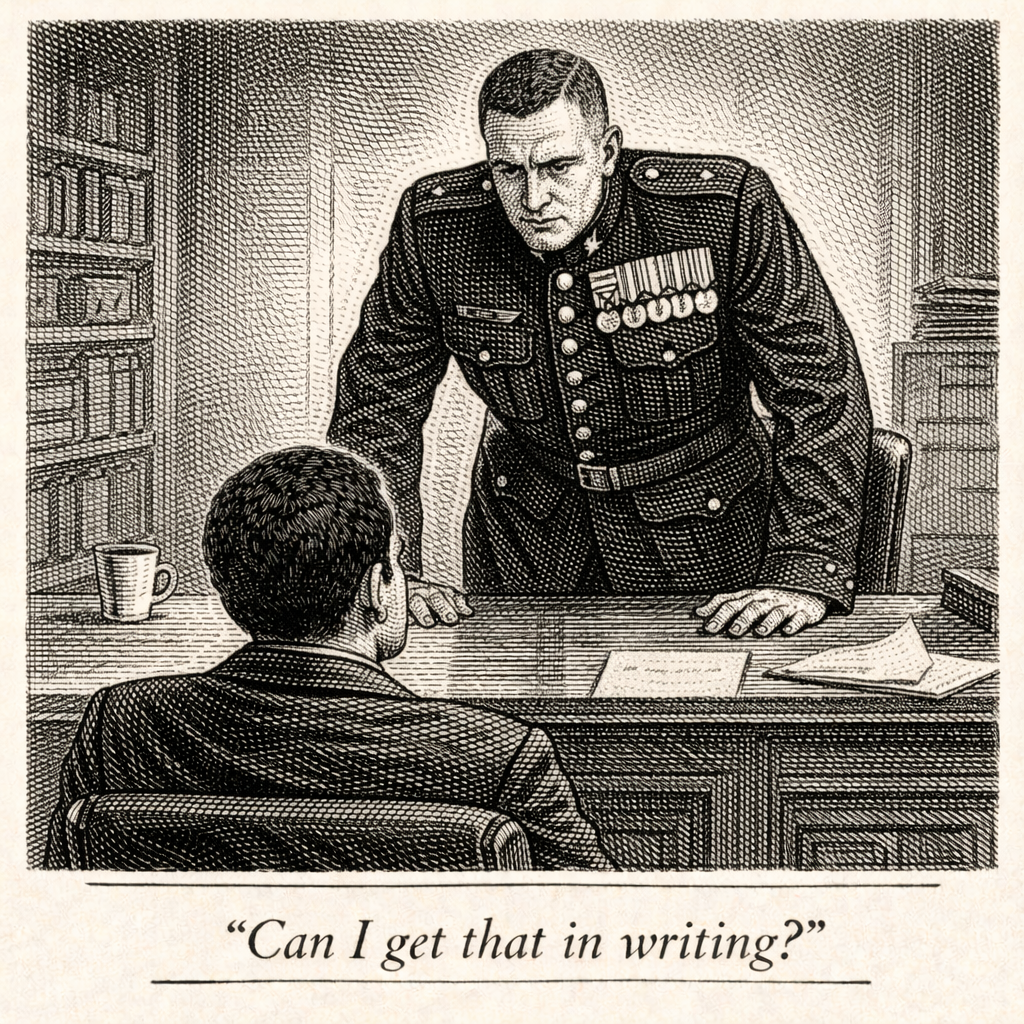
The founder of QuantoCorp was sitting in his office with his counterpart at DARPA, a thick-necked ex-Marine. Their phones sat in a sound-insulated faraday bag in the next room.
“The moment Q-dayInformal shorthand for the moment when quantum computers become powerful enough to break widely used public-key cryptography. hit,” the official said, “you stopped being a private company. Consider it a courtesy that you’re still operating independently.”
DARPA had indeed doled out hundreds of millions of dollars’ worth of grants to QuantoCorp as they had neared commercial applicability for their computing platform. They had plenty of leverage.
The founder was tense. He was a bright, ambitious man in his thirties, chafing against his tight suit. “You’re only keeping us at arm’s length because absorbing us would signal to Beijing that the threshold has been crossed.”
“Just count your blessings,” shot back the DARPA official, looming over him. “You just stumbled on the biggest treasure trove in human history.”
“So you’re authorizing the extraction plan?” asked the founder. “We’ll need a no-action letterA written assurance from a government regulator stating that it does not intend to take enforcement action against a party for a specific proposed activity. from DOJ.”
The military man paused. “Sort of. I ran this up to the chain to Treasury, and they ran it up to the big guy. It’s authorized. You’ll extract. But the coins aren’t yours. They’ll go right into the Strategic Reserve.A Treasury-administered reserve created by executive order to custody government-owned Bitcoin. Originally composed of seized assets, it is treated as a strategic reserve analogous to gold or petroleum. We’re offering you 15 percent. Call it a finder’s fee.”
The founder did the math in his head. He could feel his heart rate rising. Fifteen percent of the bounty at current prices was $150b. Who knew what it would be worth after the chaos started. “We don’t have a choice, I suppose. And our letter?”
“DOJ is working on some legal theories. Salvage law. Maritime principles. Archaic stuff, but it’s enough to convince a judge. It’ll hold.”
The founder tried to conceal his frustration. “I’ll need that in writing.”
The official laughed. “Absolutely not. Public-key encryption is dead, remember? We can’t put anything sensitive in writing right now. Our systems aren’t fully post-quantum yet. This took us by surprise too. You’ll take our word.”
“There’s something else,” he said. “These transactions can’t hit public mempools.A temporary holding area where unconfirmed Bitcoin transactions wait before being included in a block. We’ve already taken steps to quietly commandeer the largest domestic miners. Convenient that most of the hashrate is US-based. You will submit your blocks directly.”
The founder fidgeted with his Oura ring.
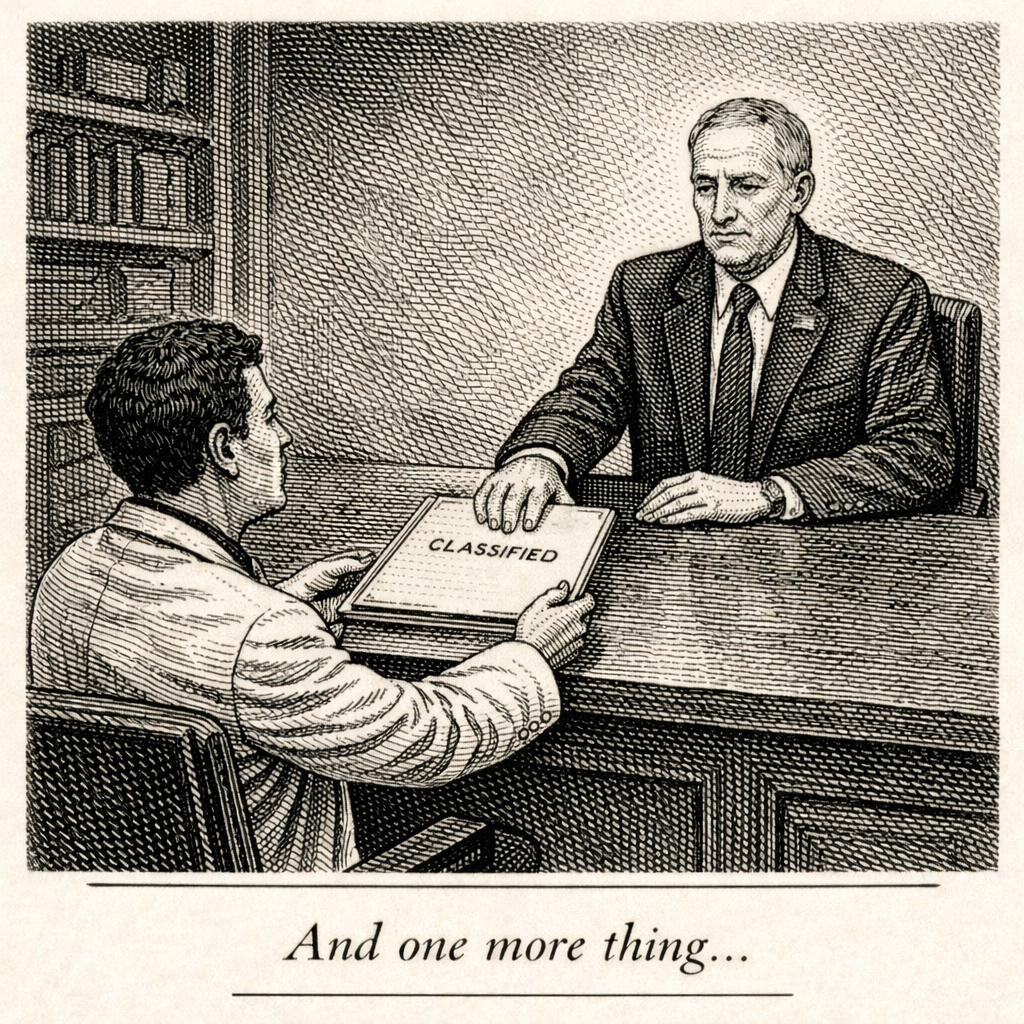
“And one last thing,” said the ex-Marine. He slid a thin folder across the desk. “15 addresses. North Korea – Lazarus. They haven’t fully migrated yet. Do these first.” He slapped him on the back. The founder flinched.
July 12, 2029
Washington, DC Classified location
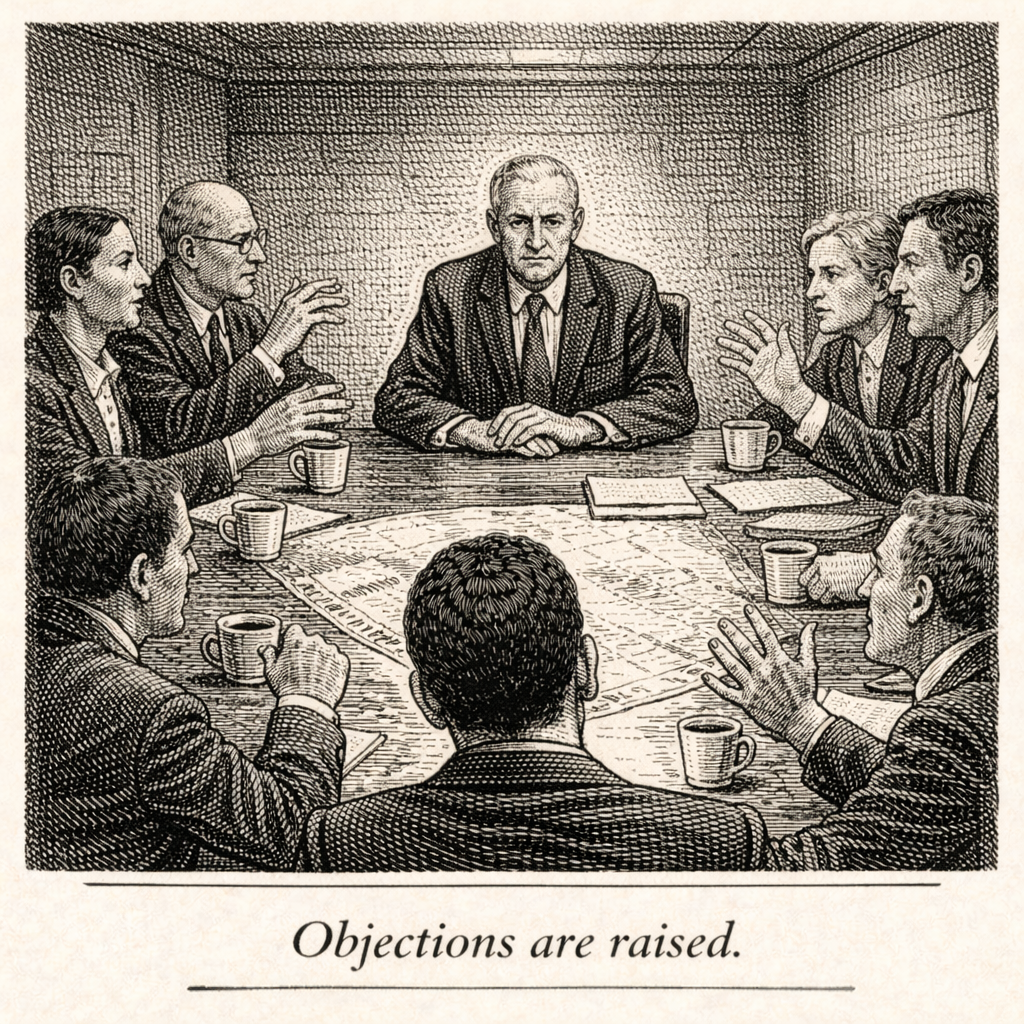
Inside a cramped bunker, the greatest financiers on the planet were engaged in a shouting match with the Treasury Secretary.
The CEO of BlueStone had gone scarlet red.
“You know our position on this, sir. You saw that open letter that we signed 18 months ago. Trillions of dollars in AUM. Tens of millions of Americans trust the people in this room with their savings and their investment accounts. And you’re going to obliterate that trust with your selfish plan? If we let the circulating supply inflate by 20% overnight, we’ll get sued out the ass by every investor that owns a dime of this thing. Those coins are lost and they need to stay gone.”
The major financial institutions with a stake in Bitcoin had indeed signed an open letter in 2028 pre-committing to support a forkA protocol change that redefines what counts as Bitcoin. In practice, the version supported by major exchanges, custodians, and users becomes the dominant chain. deprecating the 1.7m coins sitting in p2pk addresses. The Bitcoin developers, feeling little urgency to move, were stalemated over the minutiae of how to effectuate the fork. Once quantum computers had become commercially useful in late 2027, the developers had recognized the gravity of the situation and had effectuated a different fork to add a post-quantum spend path.This involves creating a mechanism whereby Bitcoin can verify signatures from a cryptographic schema that is considered resistant to quantum attacks. As of mid 2029, only 70% of addresses had made the upgrade. And coins whose owners had lost the keys or died simply couldn’t migrate.
Although those 1.7m ancient BTC were still vulnerable, everyone assumed the coins belonging to Satoshi and the early miners would eventually be burned in a subsequent fork. Once the letter had come out, all but the most ideological Bitcoiners had fallen in line. Who would want to fight a fork warA struggle over protocol changes in which competing versions of a blockchain vie for legitimacy. against BlueStone, anyway?
The Treasury chief was unmoved. “Folks. We brought you in to tell you in person as a courtesy. We’re not doing this by press release. It’s too delicate for that. Please understand that we’re exposed to considerable risk here too. The longer we wait, the closer China gets to this same capability. The collective inheritance of every American is at stake. Besides, this is nothing new. FDR did something like this with gold when it was a matter of national importance in the 30s.”
The CEO of the nation’s largest brokerage piped up. “Yes, and Roosevelt’s Order 6102An executive order issued in 1933 by President Franklin D. Roosevelt requiring Americans to surrender most privately held gold to the federal government in exchange for dollars. was a massive overreach. It’s infamous among the Bitcoiners, actually.”
“The warped economic views held by Bitcoiners do not inform policy,” said the Secretary flatly. “This is about our ability to gain a meaningful foothold into the likely successor to the dollar. I’ll be damned if I’m going to let China get their claws into it. Bitcoin is an American asset, held mostly by American households and institutions, not to mention Treasury via the Reserve. The network belongs to us. I won’t be cowed by conspiracy-peddling ideologues.”
“Sir, this conversation would meet the definition of a conspiracy,” one of the bankers volunteered. A few snickers were heard around the room.
“Spare me,” replied the Cabinet official. “And fall in line. This isn’t a negotiation. The news drops tomorrow. Do not back a competing fork. You all have bank charters and examinations. You remember Choke Point. You exist at the pleasure of the US government.”
He paused. “And no God damn leaks, ok?”
July 13, 2029
BlockRiver offices Menlo Park, CA
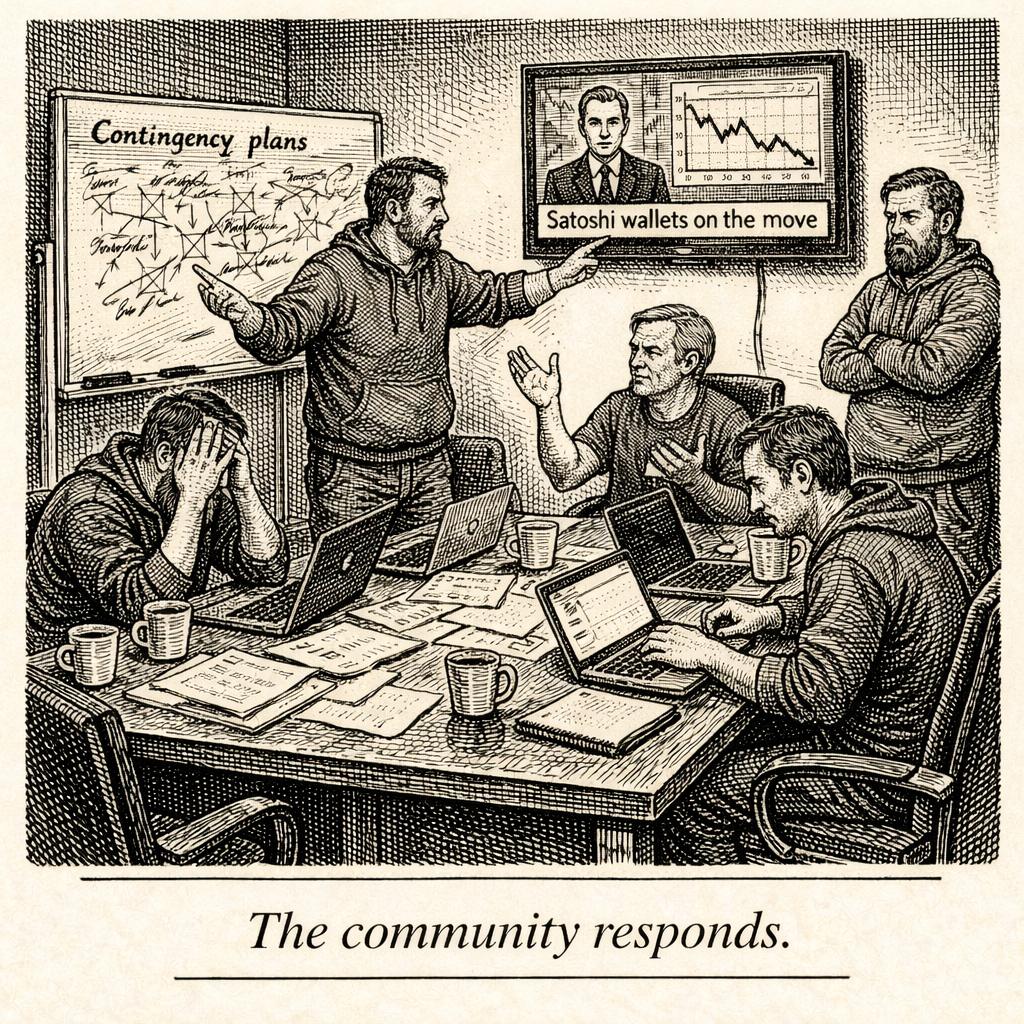
The CEO of BlockRiver was in despair. He sat motionless at the conference room table. His chief scientist sat back in his chair, arms crossed while the CTO paced. The mood was grim.
“Ok, so we were wrong,” the CEO said. “Doesn’t matter why. What matters is what we do next. People are already looking to us. Two Core maintainersSenior developers who maintain Bitcoin’s primary software codebase. They cannot force changes on the network, but their approval is usually required for major updates to be adopted. in this room, the rest on IRC.A real-time communication protocol used by Bitcoin developers for coordination and discussion. Figure it out.”
The CTO stopped pacing. “This… this is Q-day. Years early. And whoever is doing it is being selective.”
“Selective how?” the CEO asked.
“They’re only targeting Satoshi coins,” answered the CTO. “Fifty BTC per address. Nothing huge. None of the real juicy targets like the unrotated exchange addresses.”
The chief scientist cut in. “It’s restraint. Or signaling.”
“Right,” the CTO said. “It’s probably not China or Lazarus. They would have gone for larger unsecured wallets. There’s a bunch that haven’t migrated to PQ sigs yet. The Satoshi wallets are just 50 BTC apiece, small potatoes.”
“They’re proving capability without detonating the system,” said the chief scientist. “Either way, the clock is running.”
The CEO nodded. “We need to trigger the p2pk deprecation fork. The code’s been public for over a year. It’s reviewed and safe. We notify miners and set a fork height. The big economic nodes already said they would support it in that letter.”
“How deep are we?” asked the CTO.
The scientist glanced at his monitor. “Five blocks since the first batch of p2pk spends.”
“We still have time,” said the CTO. “The LevelDB bugA software bug in Bitcoin Core in 2013 caused an unintended split of the Bitcoin network into two incompatible versions of the blockchain, before it was resolved, hours later. in 2013 was worse. We recovered from a six hour chainsplit.”
The Chief Scientist was skeptical. “Dude. The market cap in 2013 was rounding error. Everyone involved could fit in a bar. Today it’s worth–”
His eyes flickered to the monitor. “Shit. It’s down 73% in the last 30 minutes.”
“Jesus Christ,” the CTO said quietly.
“Hang on,” interjected the CEO. “Shut up for a second. Something’s happening.” The TV set on mute in the back was flashing a chyron: TREASURY SECRETARY PRESSER: ADDRESSING SATOSHI WALLET ACTIVITY.
They flipped on the sound just as the Secretary read his prepared remarks, in his typical halting, unsteady tone that belied his keen intelligence.
This morning, wallets associated with the creator of Bitcoin began to move.
This is a controlled and lawful operation. Approximately 1.7 million bitcoins, long believed to be abandoned, have been secured by US government cryptographic teams and are being moved into secure federal custody. The major stakeholders in the Bitcoin network have been briefed and are supportive of the transition plan.
These assets are not being treated as abandoned property, nor as private holdings of the United States. These assets are presumptively owned by the entity known as Satoshi Nakamoto, or any lawful successor or assignee. The US government is holding them in trust, pending long-term legal and legislative resolution, under the doctrine of salvor-in-possession.
We have taken care only to secure coins we considered to be imminently vulnerable. No active wallets are affected. No private holdings are at risk.
We are taking this action now due to credible intelligence that a foreign adversary is approaching a material breakthrough in quantum computing. We will not allow a vulnerability in a critical global monetary network to be exploited against US interests.
Today marks a turning point. Bitcoin is no longer a purely private experiment. It is a strategic asset. And it will be protected as such. Thank you for your attention.
The BlockRiver leadership stared dumbfounded at the screen. The Chief Scientist broke the silence. “What the hell is ‘salvor-in-possession’?”
“Beats me,” said the CEO. “Sounds titanically stupid.”
The GC, who had been sitting quietly at the end of the table, spoke.
“It’s an old maritime doctrine. Gives a rescuer temporary custody of a ship or cargo recovered from danger. DOJ’s being cute.” He paused. “Even if it applies, salvage never defeats title. At most it buys you a reward, not ownership.”
“Guys,” interjected the CTO. “Bitcoin is rallying. Shorts are being liquidated everywhere.” He checked his phone. “CoinPort is down. Bitcoin might close the day higher than where it started.”
I guess that settles it, said the CEO.
October 4, 2029
NSA HQ Fort Meade, MD
Three months later, and things had mostly returned to normal. As it transpired, some Bitcoiners protested the recovery of the lost coins and had launched a competing fork which excluded all the p2pk outputs. But under implicit threat from the DOJ, it was ignored by almost all the major custodians, exchanges, and asset managers, and didn’t get traction. Bitcoin – the original Bitcoin, the one the US government now held over 10 percent of – had retained the name and the ticker. Treasury had pulled it off. And they were very pleased with themselves. After the initial crisis, Bitcoin rallied once people realized those coins were yet again stashed away. The price had climbed to over $600k since June. The Bitcoin Reserve almost matched the value of gold held by the US government.
The scientist at QuantoCorp who had made the initial discovery had been summoned to Washington for debriefs. Recovering Bitcoin would only be one of many applications of quantum computing that the government was interested in. Breaking elliptic curves and other forms of legacy cryptography meant that the US government could decrypt a huge portion of encrypted data from the pre-quantum era. QuantoCorp and its peers had a mountain of data to sift through.
After three weeks of nonstop grilling, the scientist was invited to Fort Meade for an interview with the head of the NSA. He didn’t know what to expect.
The NSA director offered him a wry grin from behind the desk. “I want to offer you my congratulations. You’re the most impactful codebreaker since Alan Turing. You embarrassed the CCP, and you secured an endowment for America that will outlive us both.”
The scientist smiled weakly. He desperately wanted to go home. “Thank you, sir. I didn’t think it would happen this way, but I’m glad it all worked out.”
“Neither did we. We normally develop this kind of capability decades before the private sector discovers it, but you were an exception.”
A pause. The scientist broke the silence. “Do you have any questions for me?”
“No. I just wanted to thank you for returning those coins to where they belong.”
The scientist looked at him confused. “Belong?”
The director didn’t answer immediately.
“Satoshi was us.”
He paused.
“Not officially,” the director added. “The name was adopted by two of ours. Cryptographers. It was the late 90s, and we were experimenting with digital cash. All the pieces were there long before 2008, you know. Merkle trees, elliptic curves, hashes, Proof of Work – we just assembled it. The hard part was figuring out how to run it without a central coordinator.”
He leaned back in his chair.
“Eventually we decided the project was unnecessary. The dollar wasn’t going anywhere. And no one would trust decentralized monetary software stamped US government. The project was shelved.”
“And Bitcoin?” the scientist asked.
“The two cryptographers that took the Satoshi name thought it was too good to rot on the shelf. They secretly took the code when they left. Finished it and released it online in 2008.”
“We did nothing, expecting that the network would fail. In an attempt not to legitimize the network by admitting authorship, we chose to stay silent. The irony of its later success as a decentralized currency has not been lost on us. The Strategic Reserve was our solution. A pretext to get our due.”
“But what about all the people who believed?” asked the scientist.
“They believed in a story. Useful. Just not true.”
“Auri sacra fames,”A line from Virgil’s Aeneid meaning “accursed hunger for gold” added the director, pensively.
The scientist stared at him, puzzled.
“What happened to the Satoshi team?”
“One committed suicide in 2011,” said the director, “and we believe the keys died with him. I’ll give him credit, though. He had fantastic opsec. The public never figured out who he was, even to this day. We trained him well.”
“The other one ran. Lives in Russia. Not worth the trouble to retrieve.”
The scientist thought for a minute. “Why are you telling me all this?”
“Because you recovered the coins. You closed the loop. If anyone’s earned the truth, it’s you.”
“For reasons that should be obvious, we can’t acknowledge you officially. There will be no citation. No medal. But know this: your country is grateful.”
The NSA director nodded towards the door. “You can see yourself out.”
* * *
All around the world, millions of ASICsA specialized computer chip. In Bitcoin, ASICs are purpose-built to compute cryptographic hashes for mining, consuming large amounts of energy to secure the network through brute-force computation. continued to whirr, unaware of the drama and chaos visiting the network they composed. Those millions of ASICs collectively produced sextillions of hashes every second, searching through a vast mathematical space that quantum computers couldn’t yet touch.Hash functions like Bitcoin’s SHA-256 are considered to be much less vulnerable to quantum speedups. Quantum computers are not anticipated to meaningfully affect Bitcoin mining. Though each hash was independent of the last one, and each ASIC was unaware of the existence of its neighbor, together they erected a vast thermodynamic firewall protecting the network from threats. Almost all threats.
As he stepped out into the daylight, the scientist pensively checked a block explorer, half-expecting the network to acknowledge what had just happened.
Somewhere on a server rack inside a data center in upstate New York, an ASIC stumbled on the winning hash. Mechanically, instantly, the waiting transactions were paired with the hash and the next block was submitted to the network, propagating from node to node, all over the world, in under a second.
He was a lapsed Catholic, but at that moment, Mark 8:36 popped into his head, unbidden.
For whatshall it profit a man,if he shall gainthe whole world, and lose his own soul?